Diaa Lagan, Department of Media Studies at Maynooth University and IADT (PhD Candidate)
We’re excited to present this second post as part of our special four-part blog series featuring insights from DARIAH-IE’s 2026 Early Career Researcher Bursary awardees.
DARIAH-IE was delighted to be able to support four Early Career Researchers to attend the DARIAH Annual Event, which took place in Rome, Italy in May 2026. As well as attending the event and benefiting from the networking and learning it offered, the awardees were given the opportunity to provide a short blog about their own work to share with fellow Irish Digital Arts and Humanities researchers on the DARIAH-IE website.
All the posters and presentations mentioned by Diaa can be found in DARIAH’s Digital Arts and Humanities With and For Society: Building Infrastructures of Engagement community collection on Zenodo.
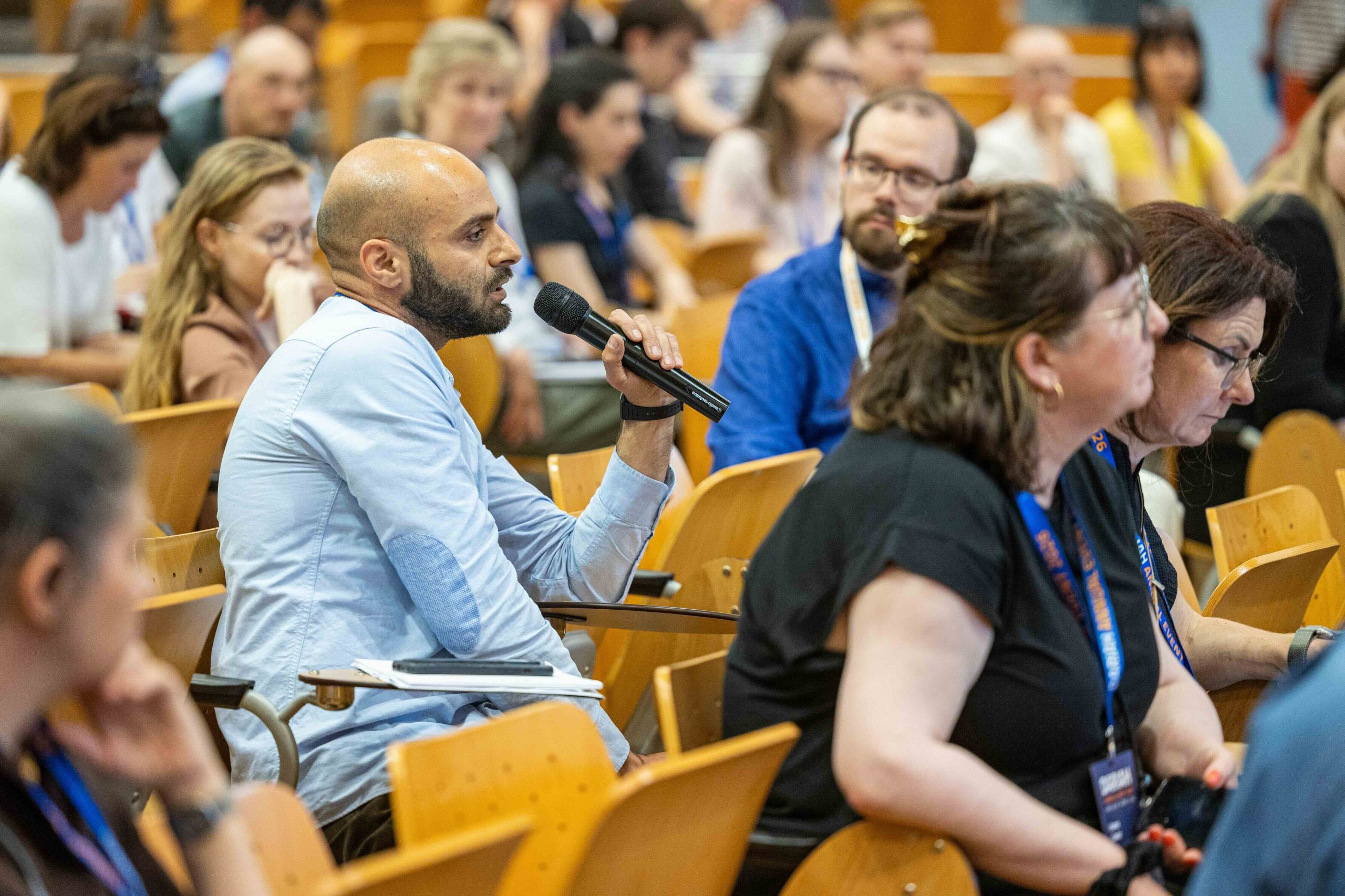
[Photo Credit: 911 Foto, CC-BY]
Reflecting on DARIAH-IE Annual Event 2026: Questioning Digital Humanities Infrastructures through Practice
Diaa Lagan[1]
Attending the DARIAH-IE Annual Event in May 2026 offered an opportunity not only to engage with current developments in digital humanities, but also to reflect critically on the relationship between infrastructure, cultural heritage, and artistic practice. Across the conference, recurring themes of accessibility, collaboration, multimodality, and public engagement highlighted how digital humanities continues to expand beyond technical infrastructures towards broader questions of knowledge production and cultural responsibility.
The first session I attended was the working group session, the Community Engagement Working Group meeting, this WG is co-chaired by Joan Murphy[2] and Michael Kurzmeier [3]. The introduction to DARIAH-Campus demonstrated the platform’s potential as a trusted educational resource, providing searchable learning materials in both English and German through an intuitive filtering system. Presentations by Kristian Schuster[4], Bettina Leitner[5], and Vicky Distson[6] illustrated the diversity of pedagogical approaches supported by the platform. Bettina Leitner’s discussion of Arabic linguistics, the ELAN software[7], and the EU-supported RAQMYAT[8] project for Master’s students, early career researchers, linguists, and digital humanities scholars was particularly relevant to my own interdisciplinary research interests.
During the discussion, I raised a question concerning accessibility beyond Europe. While DARIAH-Campus provides an impressive digital infrastructure, I was interested in how researchers working in regions with restricted internet access or unstable digital connectivity might benefit from its resources. Specifically, I asked whether downloadable or offline learning materials could become part of the platform’s future development. As digital humanities increasingly seeks international participation, accessibility must extend beyond language and include infrastructural realities experienced by researchers across different geopolitical contexts.
The afternoon plenary roundtable, (Digital Arts and Humanities with and for Society: Building Infrastructures of Engagement), featuring Jenny Bergenmar[9], Marianne Huang[10], and Sanita Reinsone[11], prompted further reflection. The discussion emphasised the capacity of digital arts and humanities scholarship to foster public engagement. However, I found myself questioning whether infrastructures alone can generate meaningful engagement. My intervention centred on the role of digital artists and media practitioners, arguing that engagement emerges through creative practice rather than technological infrastructure itself. While digital arts appeared within the panel’s title, I felt that artistic practice remained largely implicit rather than being recognised as an active force in designing and sustaining these infrastructures.
This discussion also raised broader questions concerning cultural heritage. After decades of large scale digitisation, publicly accessible collections increasingly enable reinterpretations of the past. Yet this openness also brings responsibilities. Digital cultural heritage should not merely preserve historical narratives but encourage critical reflection, challenge inherited assumptions, and create space for multiple interpretations of both personal and collective histories.
These themes continued during Andreas Fickers[12]‘ keynote, “Multimodality as a Means for Multivocality? Transmedia Storytelling and the Challenges of Shared Authority in Digital Public Humanities”. His observation that heritage archives are not neutral databases of facts but material traces assembled through specific historical relations of power closely resonated with my own research on spatial representation and archival practices. The presentation also highlighted how emerging AI systems, particularly Retrieval-Augmented Generation (RAG), inevitably inherit the silences and biases embedded within their source archives.
The keynote immediately brought to mind Walter Mignolo’s concept of pluriversality, which argues for multiple coexisting epistemologies rather than a single universal framework of knowledge. Inspired by this connection, I asked how pluriversality, multimodality, and multivocal archival practices might contribute to the contextual reclassification of West Asian archival materials held within European collections, whose cataloguing systems have historically reduced complex knowledge traditions into singular disciplinary categories. I also questioned how shared authority is negotiated within collaborative archival work and whether institutional authority, community expertise, or lived experience should take precedence when interpreting cultural heritage.
The conference demonstrated that digital humanities is increasingly engaging with questions that are simultaneously technical, ethical, and political. Rather than offering definitive answers, many sessions encouraged participants to ask more critical questions about authority, accessibility, participation, and representation. For me, these conversations reinforced that digital humanities infrastructures achieve their greatest value when they remain open to plurality, critical dialogue, and creative practice, recognising that meaningful engagement is produced not only through technological systems but through the diverse communities who actively shape, question, and reinterpret them.
[1] PhD Candidate Department of Media Studies, Maynooth University | IADT
[2] Joan Murphy is the manager of DARIAH-IE, is based in TCD’s Long Room Hub, and has been actively involved in DARIAH-IE’s Community Engagement Working Group.
[3] Michael Kurzmeier is associated with DARIAH-EU and contributes to community engagement, training, and infrastructure development within the European digital humanities research infrastructure.
[4] Kristian Schuster is Associate Professor in Digital Humanities at the University of Southampton. His research focuses on digital cultural heritage, multimodal scholarship, and digital pedagogy.
[5] Bettina Leitner is a researcher specialising in Arabic linguistics and digital language resources. During the session she presented applications of ELAN software and discussed the RAQMYAT project.
[6] Vicky Distson is affiliated with the Athens University of Economics and Business and presented examples of community engagement through digital humanities education.
[7] ELAN is a professional annotation tool developed by the Max Planck Institute for Psycholinguistics for the creation and analysis of complex multimedia annotations, particularly in linguistic and oral history research.
[8] RAQMYAT is an Erasmus+ funded European project supporting digital Arabic studies through the development of educational resources and training for students, early career researchers, linguists, and digital humanities scholars.
[9] Jenny Bergenmar is Professor of Comparative Literature at the University of Gothenburg. Her research examines literary culture, archives, accessibility, and public humanities.
[10] Marianne Huang is a researcher working at the intersection of digital humanities, cultural heritage, and public engagement.
[11] Sanita Reinsone is Senior Researcher at the Institute of Literature, Folklore and Art, University of Latvia, and works on digital folklore, citizen science, and participatory cultural heritage.
[12] Andreas Fickers is Professor of Contemporary and Digital History at the University of Luxembourg and Director of the Luxembourg Centre for Contemporary and Digital History (C²DH). His research focuses on digital history, media archaeology, archival theory, and digital public humanities.
Biographical note
Diaa Lagan, PhD Researcher, Maynooth University and IADT
Diaa Lagan is a multidisciplinary artist and PhD candidate in a joint programme between the Department of Media Studies at Maynooth University and IADT, funded by the Elevate Programme (co-funded by the Government of Ireland and the European Union through the ERDF Southern, Eastern and Midland Regional Programme 2021–27). His practice engages metaphorical narratives grounded in mythology and history. His doctoral research, Decolonial Counter-Mapping in Extended Reality, examines how immersive technologies, including virtual reality and mixed-media installation, function as practice-based worldbuilding methods that challenge dominant Western epistemologies of representation, spatial knowledge, and narrative.
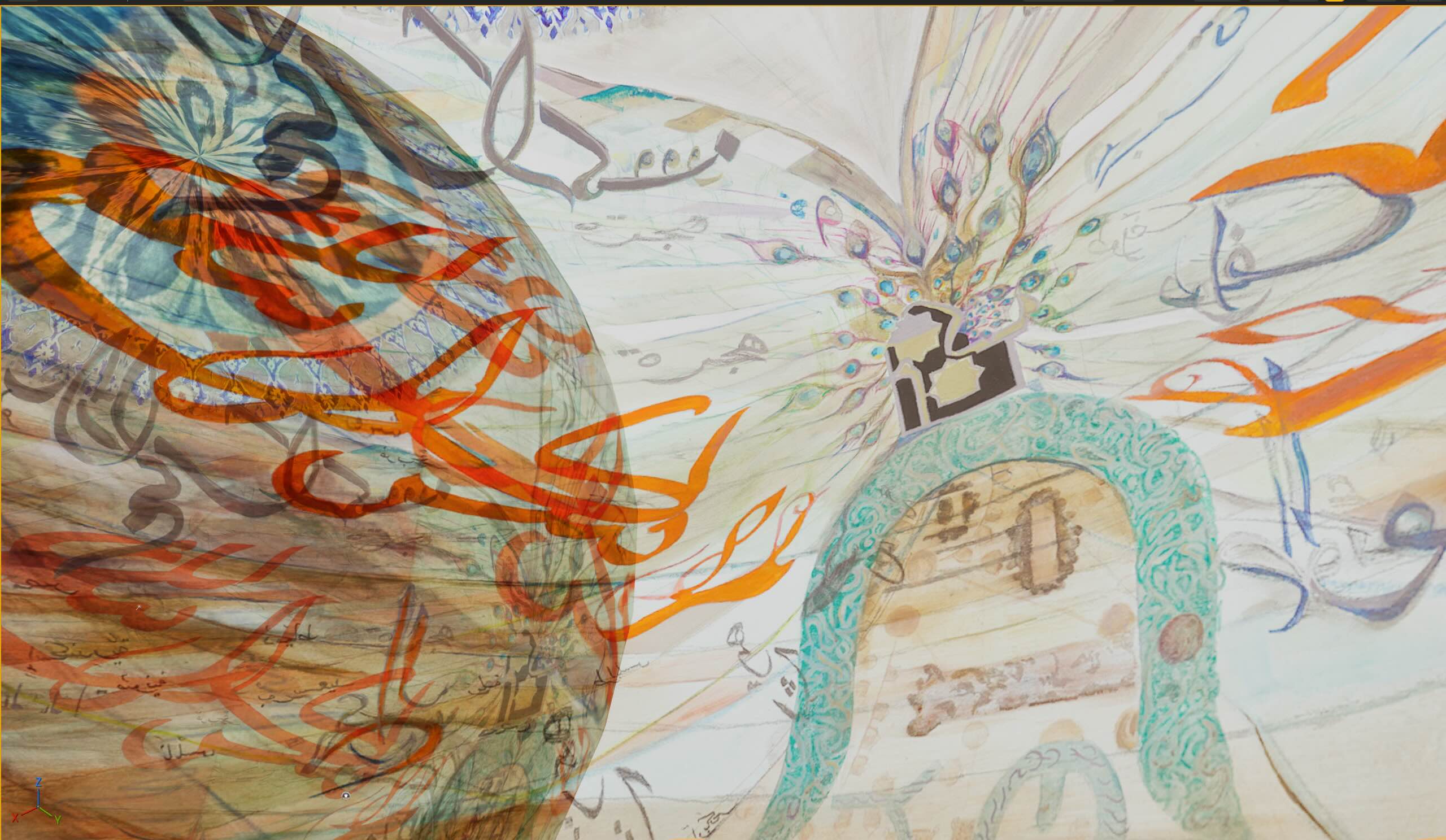
Image from Decolonial Counter-Mapping in Extended Reality project by Diaa Lagan.