DARIAH-IE

  • Home
  • About
    • Partner Institutions
    • National Advisory Committee
    • National Coordinating Institution
    • Research Ireland
    • Contact Us
  • Resources
    • DARIAH in a nutshell
    • DARIAH-Campus
    • SSH Open Marketplace
    • Transformations Journal
    • ECR Bursary
    • Research Landscape – European Initiatives, Projects and Clouds of relevance to Ireland
  • News & Events
    • 2026 ECR Bursary to DARIAH Annual Event
    • DARIAH-IE Introduces Series
    • Events & Announcements
    • DARIAH-EU News & Events
    • Past Events
      • (Re)introducing DARIAH-IE
  • Newsletter
    • Newsletter Archive
Interdisciplinary User Requirements in Burial Cultural Heritage [Survey closes Mar 15]

Cultural Heritage

Interdisciplinary User Requirements in Burial Cultural Heritage [Survey closes Mar 15]

6th March 2026 by Joan Murphy

Interdisciplinary User Requirements in Burial Cultural Heritage

The EXCALIBUR project has launched its User Requirements Questionnaire in Burial Cultural Heritage to gather essential feedback from cultural heritage professionals. This input is crucial as it will directly inform the design, functionality, and usability of the EXCALIBUR tools.

 Key details:

  • Purpose: To define the real-world needs, current workflows, key challenges, and future expectations for digital tools in the sector.
  • Topics Covered: Professional background, current data practices, challenges, digital tool expectations, and ethical considerations.
  • Estimated Time: Approximately 10 minutes.
  • Deadline: 15 March 2026.

Questionnaire here: https://docs.google.com/forms/d/e/1FAIpQLSd2_-3k_Qdfo3ErdEvnhKwBU-pH37de9ZAGw39kdoHnd8Aetw/viewform

This questionnaire aims to gather insights from professionals involved in burial cultural heritage to inform the development of innovative digital tools that enhance research, conservation, and management practices. Your input will help identify the needs, expectations, and perceived opportunities, in order for the EXCALIBUR platform to effectively address real-world challenges and unlock new benefits through advanced digital solutions.

Share this:

  • Share on Bluesky (Opens in new window) Bluesky
  • Share on LinkedIn (Opens in new window) LinkedIn
  • Share on Mastodon (Opens in new window) Mastodon
  • Share on Facebook (Opens in new window) Facebook
  • Share on Reddit (Opens in new window) Reddit
  • Email a link to a friend (Opens in new window) Email
Posted in: Cultural Heritage, Survey Tagged: Archaeology, Cultural Heritage, ECCCH

Gaps and Silences in Cultural Heritage Collections [Feb 17 @ 16:00 GMT online]

13th February 2026 by Joan Murphy

Gaps and Silences in Cultural Heritage Collections

17 February (4:00 pm to 5:30 pm)

Join the Digital Humanities Research Hub (School of Advanced Study, University of London) for a fascinating discussion about ‘Gaps and Silences in Cultural Heritage Collections’.

Registration: https://www.sas.ac.uk/digital-humanities-research-hub/events/gaps-silences-cultural-heritage-collections

The Digital Humanities Research Hub (School of Advanced Study, University of London) cordially invites you to the next session of their flagship seminar series on ‘The Fragile Record’.

We live in an age of abundant data — and yet, it remains strikingly fragile and incomplete. This seminar explores the topic of ‘Gaps and Silences in Cultural Heritage Collections.’ We will discuss issues of inclusivity and bias from an interdisciplinary perspective and examine uncertainty, privilege and power in digital archives. How do these factors influence which stories are told and how they are represented in cultural heritage collections and related research?

Please find below a short biography of the participants

Mandana Seyfeddinipur is Director of Endangered Languages Documentation Programme, formerly based at the School of Oriental and African Studies at the University of London, and part of the CLARIN-UK Consortium. The programme moved to Berlin in 2021, and remains part of the CLARIN Knowledge Centre for Linguistic Diversity and Language Documentation (CKLD).

Andrea Kocsis is Chancellor’s Fellow in Humanities Informatics, at the University of Edinburgh. She comes from an interdisciplinary and international background, and in her research, she combines heritage studies with data and network science. 

Giulia Taurino, Ph.D. is a researcher, artist, and curator specialized in AI for the management and preservation of cultural heritage collections. Her research focuses on forms of content organization in online repositories and digital archives, cultural implications of algorithmic technologies, and applications of AI in the arts, heritage and museum sectors. Past and present affiliations include the NULab for Digital Humanities and Computational Social Science, the Alan Turing Institute AI & Arts Interest Group, Getty Research Institute, metaLAB (at) Harvard, MIT Data + Feminism Lab, Brown University’s Virtual Humanities Lab. 

Lucy Havens is a postdoctoral research fellow in the Khoury College of Computer Sciences at Northeastern University.  She received her PhD from the University of Edinburgh in 2024, where she investigated how machine learning could help archivists identify gender biases in descriptive metadata.  Her research interests include human-centered AI, gender bias and empowerment, and AI evaluation, with a focus on GLAM use cases.

Share this:

  • Share on Bluesky (Opens in new window) Bluesky
  • Share on LinkedIn (Opens in new window) LinkedIn
  • Share on Mastodon (Opens in new window) Mastodon
  • Share on Facebook (Opens in new window) Facebook
  • Share on Reddit (Opens in new window) Reddit
  • Email a link to a friend (Opens in new window) Email
Posted in: Cultural Heritage, Webinar Tagged: Bias, Cultural Heritage, Digital Humanities, Events

Global Survey Findings on 3D Digitisation in Cultural Heritage [Jan 22, online, 13:00 CET]

19th January 2026 by Joan Murphy

Global Survey Findings on 3D Digitisation in Cultural Heritage [Jan 22, online, 13:00 CET]

In cooperation with Heritage Malta, the IIIF and the EU eArchiving Initiative, the newly established Research Center MNEMOSYNE at the UNESCO Chair on Digital Cultural Heritage present the final results of the 2025 Worldwide Survey on 3D Data Acquisition and Digitisation in Cultural Heritage. This event, offered free of charge, provides a comprehensive overview of the current state of the art in a field of critical importance to Humanity, focusing on the documentation, protection, preservation, and use and reuse of cultural heritage data, medatata and paradata. 

It further offers a critical assessment of the strengths and weaknesses of this domain, clearly articulating the necessity of digitising the past.

The results demonstrate how cultural heritage digitisation contributes to the achievement of the United Nations Sustainable Development Goals (UN SDGs), while simultaneously advancing scientific knowledge, supporting evidence-based heritage management, and creating long-term value for future generations. 

Moreover, the event seeks to reassess current knowledge and to articulate a clear framework for interdisciplinary collaboration, highlighting how diverse professional communities must work together to ensure the effective safeguarding and sustainable management of the material and immaterial legacy of our past.

Free of Charge Registration:
https://unescochair-dch.net/Webinar-about-Survey-on-Digital-Heritage-Results

Share this:

  • Share on Bluesky (Opens in new window) Bluesky
  • Share on LinkedIn (Opens in new window) LinkedIn
  • Share on Mastodon (Opens in new window) Mastodon
  • Share on Facebook (Opens in new window) Facebook
  • Share on Reddit (Opens in new window) Reddit
  • Email a link to a friend (Opens in new window) Email
Posted in: Cultural Heritage, Digital Preservation, Webinar Tagged: 3D, Cultural Heritage, IIIF, UNSDG

Comparing, Classifying, Clustering: Palaeographic Analysis of Inscriptions from Ancient Sicily [Dec 10, online, @17:00 CET]

9th December 2025 by Joan Murphy

Comparing, Classifying, Clustering: Palaeographic Analysis of Inscriptions from Ancient Sicily

The Venice Centre for Digital and Public Humanities (VeDPH, Dept. of Humanities, Ca’ Foscari University of Venice) is pleased to announce the final seminar in its Winter 2025 series.

On 10 December 2025 at 5 p.m. CET, Simona Stoyanova (University of Oxford) will give a talk entitled Comparing, Classifying, Clustering: Palaeographic Analysis of Inscriptions from Ancient Sicily. The seminar is co-organised by Valentina Mignosa (Ca’ Foscari University of Venice) as part of the project TES: Tracing Eastern Sicily’s networks (11th-5th centuries BCE).

The event will take place at the VeDPH Lab and online via Zoom. Online participation is possible upon registration. More information and the registration link are available here:
https://www.unive.it/data/33113/2/106868. 

Recordings of the seminars in the 2025 series will be made available on the VeDPH YouTube channel.

Share this:

  • Share on Bluesky (Opens in new window) Bluesky
  • Share on LinkedIn (Opens in new window) LinkedIn
  • Share on Mastodon (Opens in new window) Mastodon
  • Share on Facebook (Opens in new window) Facebook
  • Share on Reddit (Opens in new window) Reddit
  • Email a link to a friend (Opens in new window) Email
Posted in: Events, Lecture Tagged: Computational Analysis, Cultural Heritage, Digital Humanities, Italy, Palaeographic Analysis

Playing with culture: games as heritage, from preservation to reuse [Nov 26, online, @14:00 CET]

17th November 2025 by Joan Murphy

Europeana Webinar – Playing with culture: games as heritage, from preservation to reuse

Video games are an engaging way to interact with cultural heritage – entertaining a captive audience with historical periods, facts and with tangible and intangible culture. In this webinar we will explore the video game as a cultural artefact in its own right.

This webinar is organised by Europeana Foundation in association with EFGAMP (European Federation of Game Archives, Museums and Preservation Projects)

Video games can also be seen as cultural artefacts which require careful preservation, that can be reused in their own right, and whose gameplay is in itself a form of intangible heritage. In this webinar we will explore the video game as a cultural artefact – diving into preservation, archiving, and reuse case studies with speakers from EFGAMP network, before discovering some of the ways that video games can be used to disseminate digital cultural heritage material with other speakers. This will be followed by a panel discussion with the speakers.

Confirmed speakers are:

  • Andreas Lange, European Federation of Game Archives, Museums and Preservation Projects
  • Winfried Bergmeyer, International Computer Game Collection
  • Wytze Koppelman, Netherlands Institute for Sound and Vision
  • Gabriele Aroni, Manchester University
  • Lucia Gambardella, Studio Macaco
  • Hosted by Fiona Mowat, Europeana Foundation

Registration: https://pretix.eu/Europeana-Foundation/Playing-with-culture/

Share this:

  • Share on Bluesky (Opens in new window) Bluesky
  • Share on LinkedIn (Opens in new window) LinkedIn
  • Share on Mastodon (Opens in new window) Mastodon
  • Share on Facebook (Opens in new window) Facebook
  • Share on Reddit (Opens in new window) Reddit
  • Email a link to a friend (Opens in new window) Email
Posted in: Cultural Heritage, Digital Preservation, Video Games, Webinar Tagged: Cultural Heritage, Digital Preservation, Europeana, Video Games

Caught in the web: Digitising Arachnid Collections

9th September 2025 by Joan Murphy

16 September 2025, 11:00–12:00 [Online]

Caught in the Web: Navigating Challenges in Digitising the Arachnid and Myriapod Collections

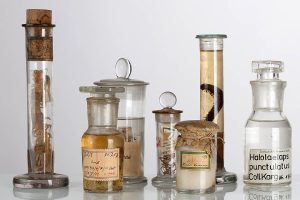
Dr. Jason Dunlop, curator of the Arachnida and Myriapoda collections at the Museum für Naturkunde Berlin, will share insights into the complex process of digitising natural history collections and present the approach taken. While the focus of this online lecture is natural history artefacts it may also be of interest to those working with Cultural Heritage collections and the Collections as Data paradigm.

The presentation will address:

·               Transferring metadata from catalogues into usable digital formats

·               Ensuring data consistency

·               The importance of curatorial expertise in digitisation workflows

·               Ensuring long-term data integrity through committed curation efforts 

For more information about the talk and the link for registration: https://winoda.de/en/event/caught-in-the-web/

Share this:

  • Share on Bluesky (Opens in new window) Bluesky
  • Share on LinkedIn (Opens in new window) LinkedIn
  • Share on Mastodon (Opens in new window) Mastodon
  • Share on Facebook (Opens in new window) Facebook
  • Share on Reddit (Opens in new window) Reddit
  • Email a link to a friend (Opens in new window) Email
Posted in: Data Science, Digitisation, Events, news Tagged: Collections as Data, Cultural Heritage, data management

News & Upcoming Events

  • Bursary Announcement – UK-IE Digital Humanities Association [Deadline 13 April]
  • 3rd Symposium on Digital Art in Ireland [April 22, in person, UCC] Registration Open
  • DARIAH Digital Arts and Humanities Training and Summer School Small Grants 2026 [Call closes April 16]
  • Europeana Café – AI at the intersection of research and cultural heritage [Mar 25 @ 13:00 CET, online]
  • Introduction to the Digital Humanities Climate Coalition Toolkit [Mar 18 @ 13:00 EDT, online]
  • Interdisciplinary User Requirements in Burial Cultural Heritage [Survey closes Mar 15]
  • Videogame Preservation [March 12, online seminar, 10-17 GMT]
  • Considering a Digital Humanities PhD in the UK ? Seminar [Mar 9 @ 16:30 online]

DARIAH-IE is funded by Research Ireland

Unless stated otherwise all contents of this site are licensed under CC-BY-4.0-Licence

Copyright © 2026 DARIAH-IE.

Custom WordPress Theme by themehall.com