THIRST: the societal and environmental costs of AI data centre expansion [18 Sept, Galway, in-person]
THIRST: the societal and environmental costs of AI data centre expansion

1–2pm, September 18th, 2026

Studio 3, O’Donoghue Centre, University of Galway

Dr. Kat Austen in conversation with Fiona McGarry, introduction by Dr. Paul O’Neill

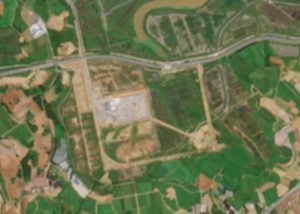
AI data centres are being built at an accelerating rate around the globe, their demands for water and energy raising concern. At the same time, AI agents are becoming embedded in search engines, operating systems, software and even in the infrastructure for critical services. Through long-term artistic research, Kat Austen explores the systemic impact of AI expansion, both on and offline. Since 2025, Austen has worked with Paul O’Neill to explore global perspectives on AI data centre expansions. In conversation with Fiona McGarry (Journalism & Media), Austen will present research into the landscape changes at a data centre construction site in Asia, and the resonances that this shares with similar sites around the world.

Dr. Kat Austen is a recipient of the Visiting Fellowship Scheme at University of Galway’s College of Arts, Social Sciences, & Celtic Studies, in collaboration with Dr. Paul O’Neill (Huston School of Film & Digital Media).

Register here: https://ti.to/creative-tech/ai-data-centres-kat-austen

Sustainability and Digital Preservation webinar [15 July @ 2pm, online]

This month, Digital Preservation Southampton is running a special themed session of our free online webinars focused on Sustainability and Digital Preservation. 

Get to Know Us – Summer Edition: Sustainability and Digital Preservation

Building on our attendance at the UK-Ireland Digital Humanities Association Annual Event, focused on Sustainability, as well as recent developments in the sector focused on carbon literacy and environmentally conscious digital preservation practices, we will be offering a survey of available guidance, toolkits, and projects to look forward to that can guide your sustainability planning.

This will also serve as a discussion space where you can share your experiences of implementing sustainable practices at your institution.

July 15, 2026

Online | 2-3pm BST (See in your timezone)

Register here

Introduction to the Digital Humanities Climate Coalition Toolkit [Mar 18 @ 13:00 EDT, online]

An Introduction to the Digital Humanities Climate Coalition Toolkit

March 18, 2026 1:00 pm – 2:15 pm Eastern Daylight Time

On March 18 at 1:00 PM EDT, eLabs will host a webinar that invites researchers to explore questions around the environmental impact of digital humanities work. The session draws on the approaches and resources developed by the Digital Humanities Climate Coalition (DHCC), a collaborative and cross-institutional initiative focused on understanding and minimizing the environmental impact of digital humanities research. Among their resources is a toolkit designed to help individuals and organizations make informed digital choices and support the development of more sustainable research projects.

Led by Christopher Ohge, eLabs advisory board member and a member of the DHCC, this webinar will provide guidance on how to implement the toolkit in research projects. The session will open with an introduction of the DHCC, providing background and context on the activities the coalition has supported in universities, libraries, and archives. It will then touch upon several areas in the toolkit, including:

  • Minimal Computing: explores how we can reduce the carbon footprint of our digital practices. 
  • Maximal Computing: examines computationally intensive digital tools such as Machine Learning, and offers perspectives on when these might be justifiable. 
  • Grant Writing: includes recommendations on designing (or redesigning) research projects, including Data Management Plans.
  • Working Practices: offers guidance on reducing energy consumption in your day-to-day working life, including communication and shared working, travel, and publishing and preserving data. 
  • Advocating within your Institution: offers tips on how to go beyond individual or project-level sustainability. 

The toolkit is designed to encourage researchers to adopt climate-responsible research practices. It aims to empower them to make climate-friendly technological decisions, and to support researchers who lack the practical knowledge about how to devise greener initiatives. As such, the toolkit (and this webinar) aims to raise awareness and provide practical tips on planning and management of one’s research infrastructure and data. Staff members, students and fellows will learn how to approach and improve their research design and implementation, as well as digital work more broadly.

Registration link: https://events.zoom.us/ev/ArTdA4F9q7dzkVL5cym9BdEnTAcleGdA2VPyYAry20QD7pZ9VsOY~AkYoZA_cW5R4AlLqYu717Z3ONrTU2TUEEPY0gKbTNUsBXzFzyUxocVkMbQ