New Community Interest Groups announced by UK-IE DHA


6 new Community Interest Groups (CIGs) have been approved and will be joining the UK-Ireland Digital Humanities Association.

We are delighted to announce that, following a highly competitive call for applications in May 2026, 6 new Community Interest Groups (CIGs) have been approved and will be joining the UK-Ireland Digital Humanities Association.

Newly Approved Community Interest Groups:

  • Cultural Heritage Open Scholarship Network (CHOSN)
  • Digital Humanities Pedagogies
  • Digital Infrastructures for Arts, Humanities & Cultural Heritage (DIAHCH)
  • Humanities and Data Science
  • UK-Ireland Web Archive Research Network (UK-IE WARN)
  • Feminist Digital Humanities

With these additions, we now have 10 active Community Interest Groups, reflecting the breadth, diversity, and vibrancy of digital humanities research and practice across the UK and Ireland.

To read more about our CIGs, these groups and more, you can read the full announcement here: https://digitalhumanities-uk-ie.org/2026/09/21/2026-new-cigs/

Case Studies from #DiscussAI: A National Conversation on Artificial Intelligence in Ireland [2 Oct, online, 10:30am]

Dr. Emma Clarke and Paula Kelly to present on two case studies from the #DiscussAI project

Friday Frontiers is back !

The first in the Autumn/Winter 2026 series of Friday Frontiers will welcome Dr. Emma Clarke and Paula Kelly to present on two case studies from the #DiscussAI project. 

When: Friday 2nd October, 10.30 WEST / 11.30 CEST

Title: Case Studies from #DiscussAI: A National Conversation on Artificial Intelligence in Ireland

Speakers: Dr Emma Clarke (Dublin City University) & Paula Kelly (Technical University of Dublin)

Registration Link: https://dariah.zoom.us/meeting/register/uSQOL_dAQWCujoTv3jqy7A
Description

As Artificial Intelligence (AI) is increasingly embedded in everyday life, decisions about its development and deployment are often made without meaningful input from the people it affects. Ireland’s national AI strategy, AI – Here for Good, places strong emphasis on citizen involvement. However, public understanding of AI and its societal impact lags behind the pace of technological advances. Many communities, particularly those traditionally underserved by science and technology engagement, remain excluded from the conversation, therefore, AI literacy is essential to enhance inclusion. 

The Research Ireland ADAPT Centre launched #DiscussAI in September 2021, establishing a national conversation on AI that equips people across Ireland with the knowledge and skills to critically engage with AI-driven systems and make informed choices. Co-creating dialogue is at the heart of #DiscussAI. This session introduces that approach through two case studies, and explores why participatory, co-created dialogue matters for research and practice on the societal impact of AI. 

Case Study 1: Age-Friendly AI 

Age-Friendly AI places older adults at the centre of the conversation on AI. The AI training programme builds on dialogue with older people, ensuring that content reflects their real-life experiences and needs. 

Case Study 2: The Bigger Picture 

An art-science initiative designed to explore public perceptions and misconceptions of AI. Combining public workshops, critical analysis and artist submissions, The Bigger Picture uses creative practice as a route into critical dialogue about AI. 
Speaker Biographies 

Dr Emma Clarke – Age-Friendly AI Co-Lead 

Dr Emma Clarke is the Engaged Research Lead at the Research Ireland ADAPT Centre, based at Dublin City University where she works on ADAPT’s #DiscussAI initiative – a National Conversation on Artificial Intelligence that has engaged over 85,000 citizens in conversations about the societal impact of AI in Ireland since 2021. Emma’s work centres on citizen science, participatory dialogue and multi-stakeholder engagement. She is co-lead of Age-Friendly AI – Ireland’s National Artificial Intelligence Literacy Initiative for Older Adults. Emma has presented her research at international forums including PCST and ECSA. She holds a PhD from the School of Computer Science and Statistics at Trinity College Dublin, specialising in cross-disciplinary knowledge transfer. 

Paula Kelly – Age-Friendly AI Lead 

Paula is a lecturer and a member of the tPOT research group in the School of Electrical & Electronic Engineering at TU Dublin. She is the team lead on the Research Ireland funded Age-Friendly AI: Ireland’s National Artificial Intelligence Literacy Initiative. Over two years this initiative is fostering a national dialogue on AI with older adults across Ireland, and co-creating and delivering a comprehensive, accessible, and inclusive national AI literacy programme tailored specifically with and for this demographic. Paula is also involved as a volunteer tutor and facilitator in a number of public engagement STEM activities hosted by tPOT and WITU.

(re)Imagining the future for Digital Arts and Humanities in Ireland [4th March, 2027, Save the Date]

📌 Save the date for a DARIAH-IE Networking Day hosting the UK-IE Digital Humanities Association’s Regional Meeting

📆 March 4th, 2027 | 📍 Trinity Long Room Hub, Trinity College Dublin  | 🕰️ 10:30 – 16:00

Save the date for a national event bringing together practitioners, researchers and academics working in digital arts and digital humanities across Ireland.

Hosted by DARIAH-IE, Ireland’s national node of DARIAH the pan-European Digital Research Infrastructure for the Arts and Humanities, the day will also see the first meeting of the UK-Ireland Digital Humanities Association (UK-IE DHA) Regional Event Series.

This jointly organised event will bring together a broad range of stakeholders, reflecting the strength of collaboration between the DARIAH-IE infrastructure and the UK-IE DH Association.

The day is designed to:

  • Introduce the affordances of engagement with DARIAH-IE and the UK-IE DHA
  • Provide the opportunity to talk to – and hear from – colleagues across the island
  • Share knowledge across HEIs
  • Encourage participation in and engagement across DARIAH Working Groups and UK-IE DHA Community Interest Groups
  • Invite discussions on training needs, collaborations and events

Whether you are new to digital arts and humanities or already active in the field, this is a chance to connect with colleagues from across the island and help shape the future of both DARIAH-IE and the UK-IE DHA.

Full programme and registration details to follow, provisional timelines below:

  • October 20th, 2026 – Call for Papers and Provocations opens
  • November 27th, 2026 – CfP closes
  • December – Programme announced
  • January 11th, 2026 – Registration opens
  • February 11th, 2026 – Registration closes

A bursary call will also be announced in the coming months.

Keep an eye on our Event page for more info

For queries contact joan.y.murphy@tcd.ie or uk-ie.digitalhumanities@sas.ac.uk 

Meet the Neighbours: ORI, Sonraí and the Irish Reproducibility Network [28 Sept, 11am, online]

ORI, Sonraí and the Irish Reproducibility Network

Repository work does not happen in isolation. The same researchers whose outputs we deposit are also being asked to manage their data properly, document their methods transparently, and make their work reproducible. Different national networks are supporting different parts of that picture, often without knowing much about each other.

This ORI event brings three of those networks into the same room.

Agenda

  • Welcome and introduction, Hardy Schwamm (UCC), ORI
  • Sonraí, the Irish Data Stewardship Network, Zenobie Garrett (RCSI)
  • The Irish Reproducibility Network (IRN), Dermot Lynott (Maynooth University), IRN Chair,
  • Open discussion: where our work overlaps, and where we could work together

About the three networks

ORI is a national peer network where repository practitioners support each other, share knowledge, and work together to strengthen repository practice across Ireland.

Sonraí is Ireland’s data stewardship network. It works to raise the profile of data stewards, professionalise the role, and build the skills needed for a FAIR and open research data landscape. If you have ever been “the data person” in your team, Sonraí is talking about your work.

The Irish Reproducibility Network is a national, peer-led consortium working to improve research quality, transparency and culture across all disciplines. It focuses on training, connecting local leads across institutions, and practical support for open and reproducible practice.

All are grassroots practitioner networks, initially supported by the National Open Research Forum, and all three are working towards the same national goals under the National Action Plan for Open Research.

Register your interest here

28 Sept, 11am, online

DARIAH-IE Announces 2026 Bursary Recipients to Attend DARIAH Annual Event in Rome

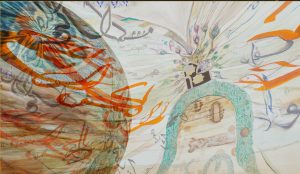
Original project artwork by Diaa Lagan bursary recipient

DARIAH-IE Announces 2026 Bursary Recipients to Attend DARIAH Annual Event in Rome

[Image above by Diaa Lagan, Bursary Recipient]

Four Early Career Researchers from Ireland selected to participate in DARIAH Annual event

DARIAH-IE is delighted to announce the four recipients of its 2026 Early Career Researcher Bursary Scheme, which will support emerging Irish scholars to attend the DARIAH Annual Event, taking place in Rome, Italy from 26–29 May 2026. The theme of this year’s event is: Digital Arts and Humanities With and For Society: Building Infrastructures of Engagement.

This bursary initiative reflects DARIAH-IE’s ongoing commitment to fostering the development of Ireland’s digital arts and humanities communities by providing emerging scholars with invaluable opportunities for international networking and professional growth.

The DARIAH Annual Event brings together researchers, technologists, and cultural heritage professionals from across Europe for presentations, poster sessions, workshops, and networking opportunities that enable engagement with the latest developments in digital research methods, tools, and resources for the digitally-enabled arts and humanities.

Building on the success of last year’s programme, which supported four Irish researchers to attend the DARIAH Annual Event in Göttingen, Germany, this year’s bursary scheme will once again enable early career scholars to participate fully in this prestigious event. Following the conference, bursary recipients will be invited to contribute a short media piece — such as a blog post or interview — to be published on dariah.ie.

Meet the 2026 Bursary Recipients

Diaa Lagan

Diaa Lagan is a multidisciplinary artist and PhD candidate in a joint programme between the Department of Media Studies at Maynooth University and IADT, funded by the Elevate Programme (co-funded by the Government of Ireland and the European Union through the ERDF Southern, Eastern and Midland Regional Programme 2021–27). His practice engages metaphorical narratives grounded in mythology and history. His doctoral research, Decolonial Counter-Mapping in Extended Reality, examines how immersive technologies — including virtual reality and mixed-media installation — function as practice-based worldbuilding methods that challenge dominant Western epistemologies of representation, spatial knowledge, and narrative.

Ellen Scally

Ellen Scally recently graduated with a PhD from the Department of Film & Screen Media at University College Cork, where she was also a graduate of the MA in Film & Screen Media. Her doctoral research concerned the history of amateur film and cine-culture in Ireland, and her interests span Irish cinema history, amateur film practice, community cinema, and the audio-visual archive. Her PhD was awarded an Irish Research Council Government of Ireland Postgraduate Scholarship and, in 2025, she was a fellow at the Centre for Advanced Internet Studies in Bochum, Germany. Ellen is also a co-organiser of Haunted Futures, an annual interdisciplinary conference at University College Cork.

Guang Yang

Guang Yang is an MA student in Digital Arts and Humanities at University College Cork. His research applies multimodal computational methods to historical botanical works, focusing on the visual and material structures of illustrated knowledge. His poster, “Phyto-Vision: A Reproducible Workflow for the Computational Excavation of Global Botanical Iconography,” has been accepted for presentation at the DARIAH Annual Event 2026. His work examines how botanical images shaped the circulation and organisation of knowledge across global traditions, developing computational workflows using computer vision, vision–language models, and visual analytics to analyse large collections of digitised illustrations.

Vicky Bouche

Vicky Bouche is a PhD candidate in the School of Education at Trinity College Dublin, where her research centres on how Generative AI-supported feedback can enhance student-teacher relationships in multilingual and multicultural classrooms. With a background as a secondary school French and Spanish teacher, she holds a Professional Master of Education and a Master’s in French Language and Literature. Her research engages with Second Language Acquisition, educational technology, and inclusive curriculum design, guided by the conviction that “technology is most powerful when it brings people closer to learning—and to each other.”

About DARIAH-IE

DARIAH-IE is the Irish national node of DARIAH (Digital Research Infrastructure for the Arts and Humanities), a pan-European research infrastructure supporting digital research across the arts and humanities. DARIAH-IE supports Irish researchers to connect with a European network of expertise, tools, and resources. For more information, visit dariah.ie.

About the DARIAH Annual Event 2026

The DARIAH Annual Event is the flagship gathering of the DARIAH community, bringing together researchers, technologists, and cultural heritage professionals from across Europe and beyond. The 2026 event takes place in Rome, Italy, from 26–29 May, under the theme Digital Arts and Humanities With and For Society: Building Infrastructures of Engagement. For more information, visit the DARIAH website.